CECI N’EST PAS UN COUPLE
A solo performance about manipulation, consent and identity, where intimacy and illusion replace the traditional idea of a couple on stage.
Synopsis
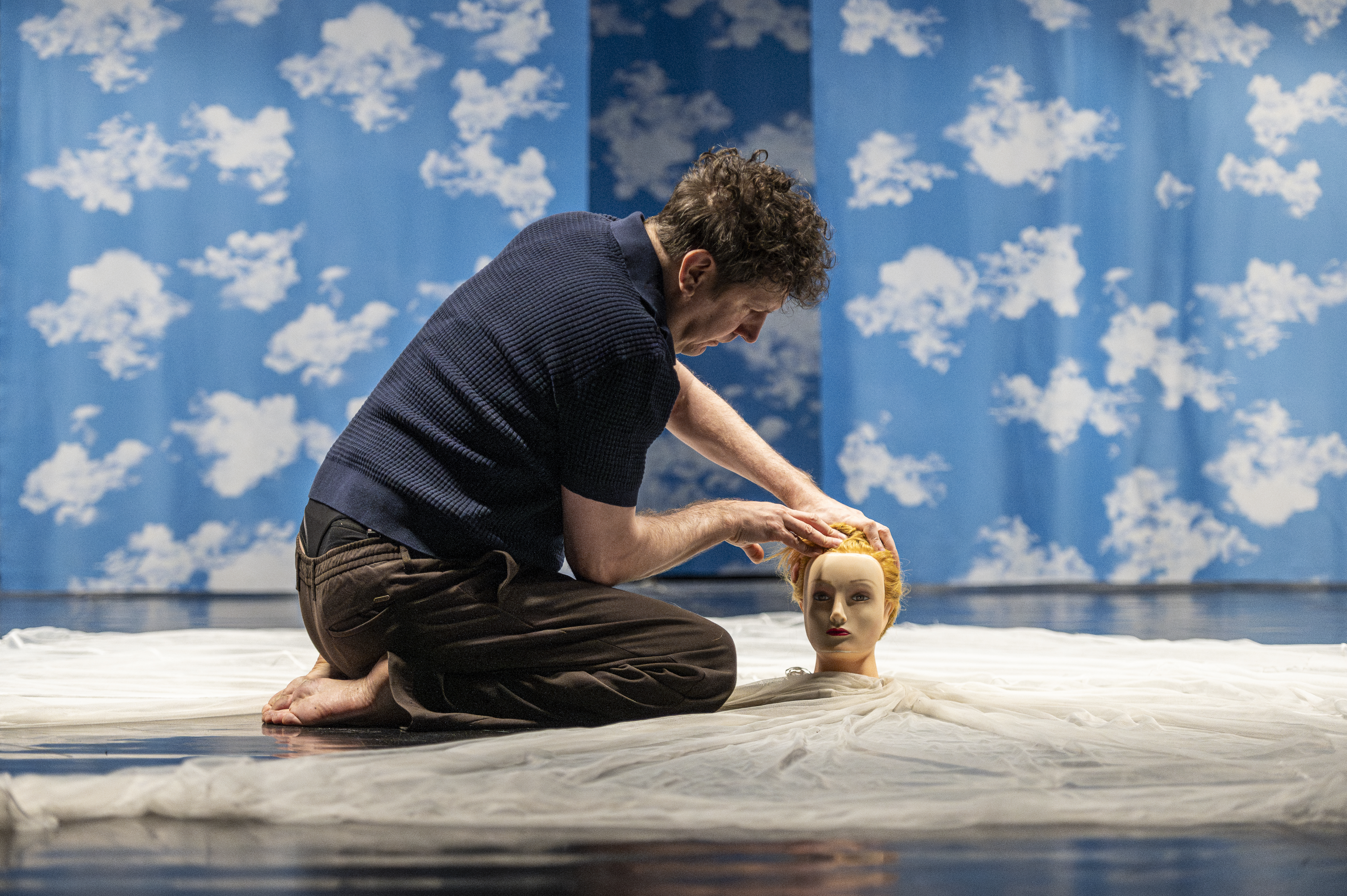
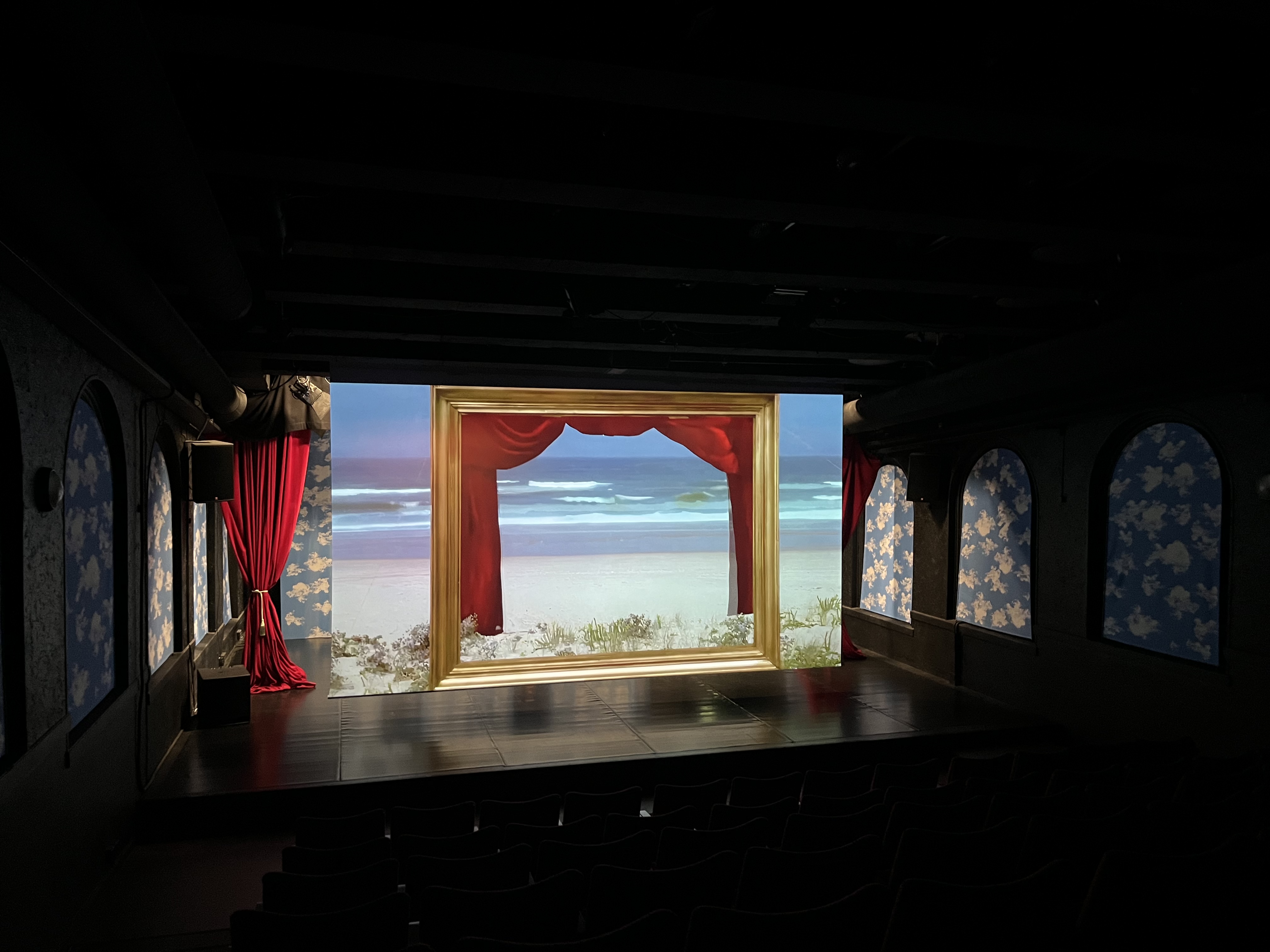
Ville and Jessica are running towards eachother on a sunny deserted beach. Jessica is happy. Ville is happy. Everything is well. Small fluffy white clouds float on the sky.
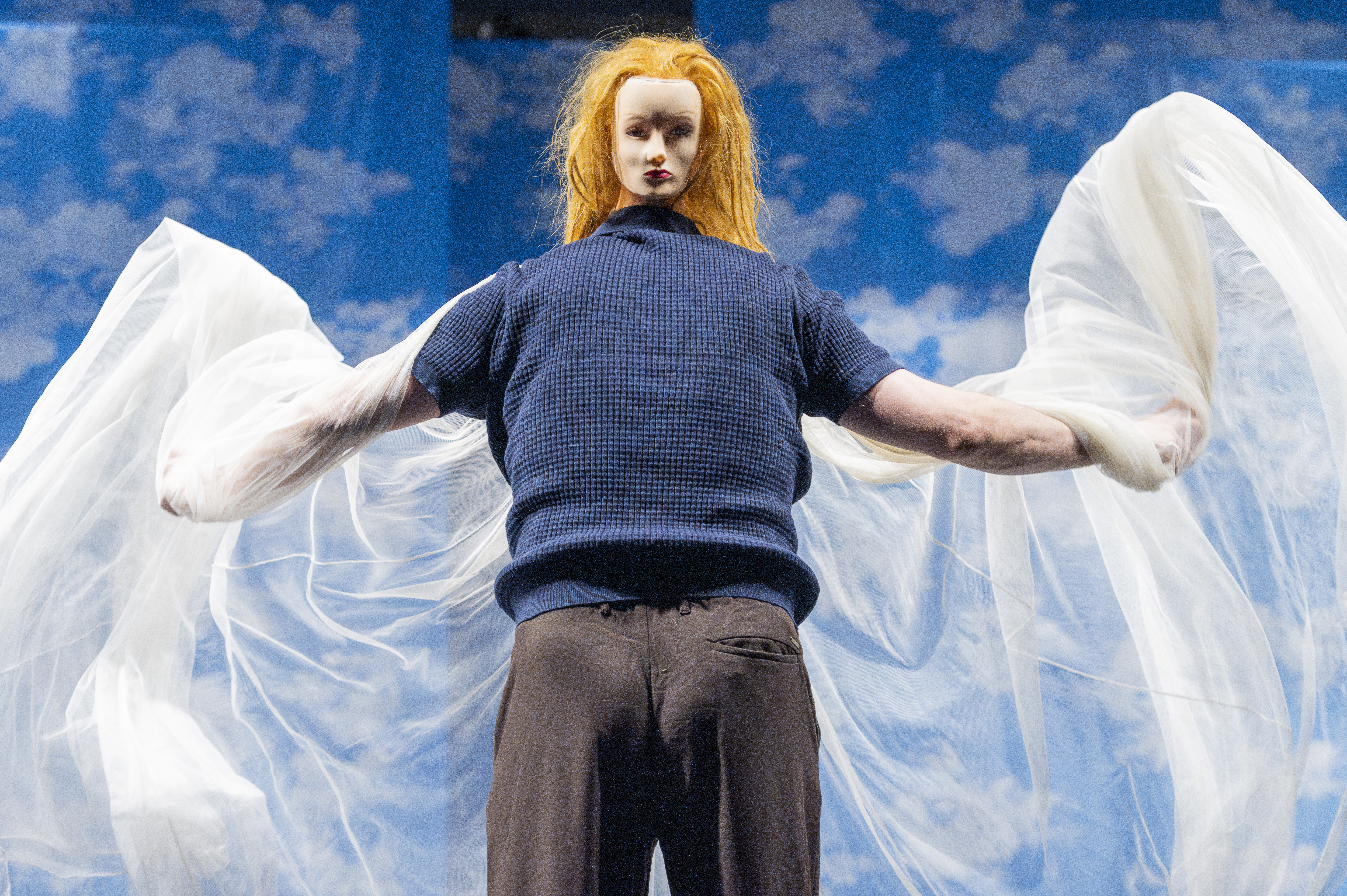
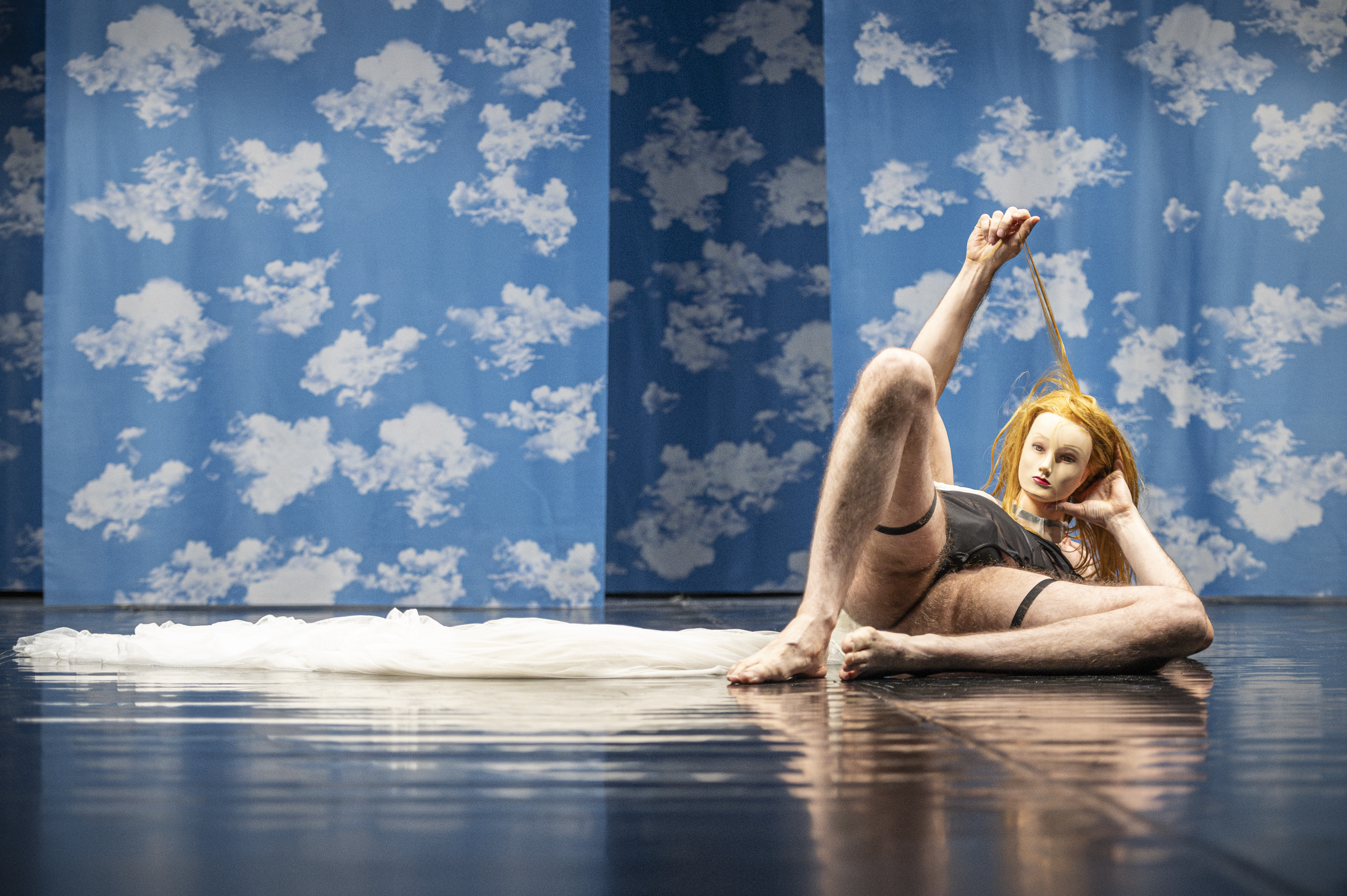
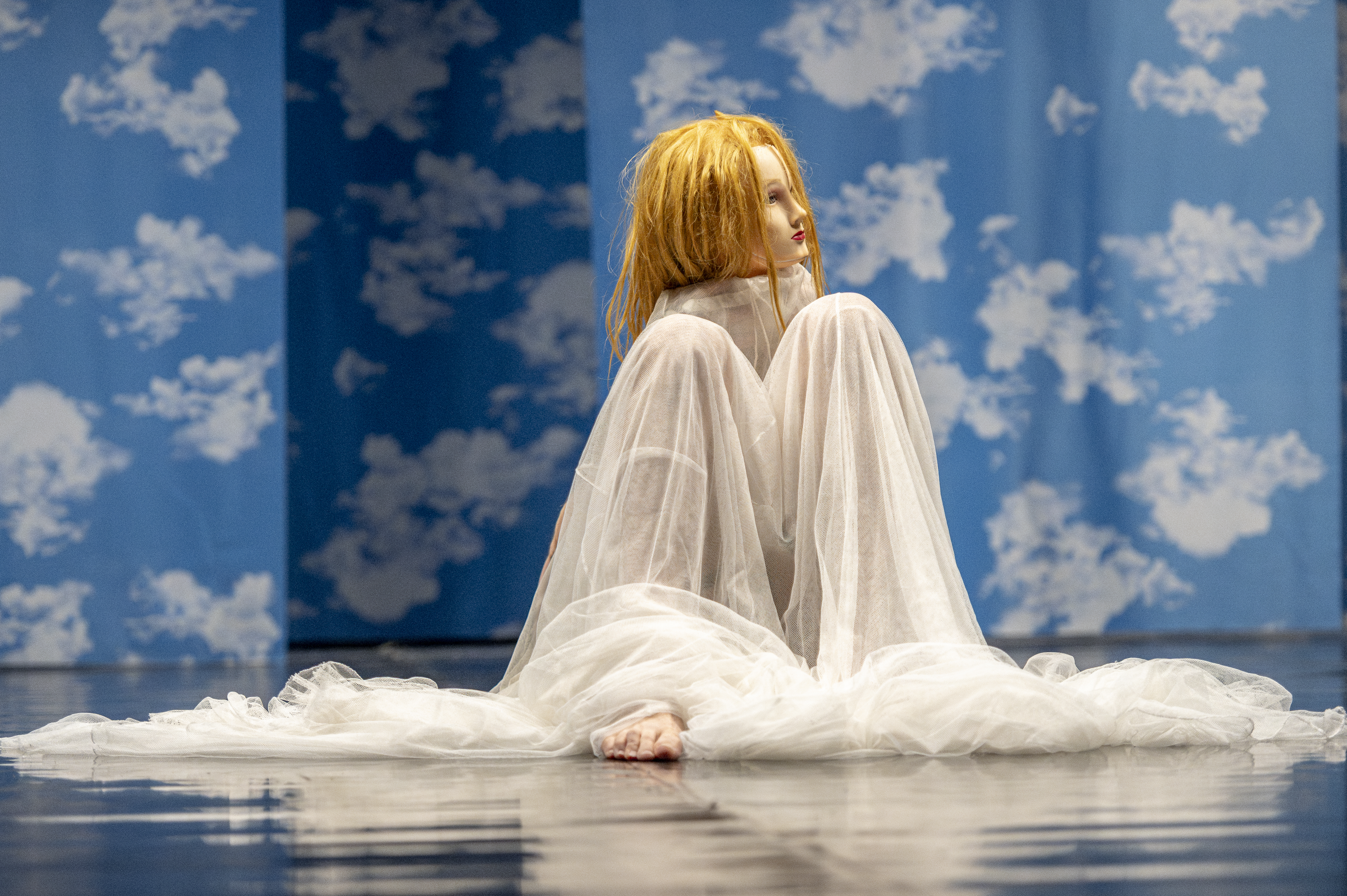
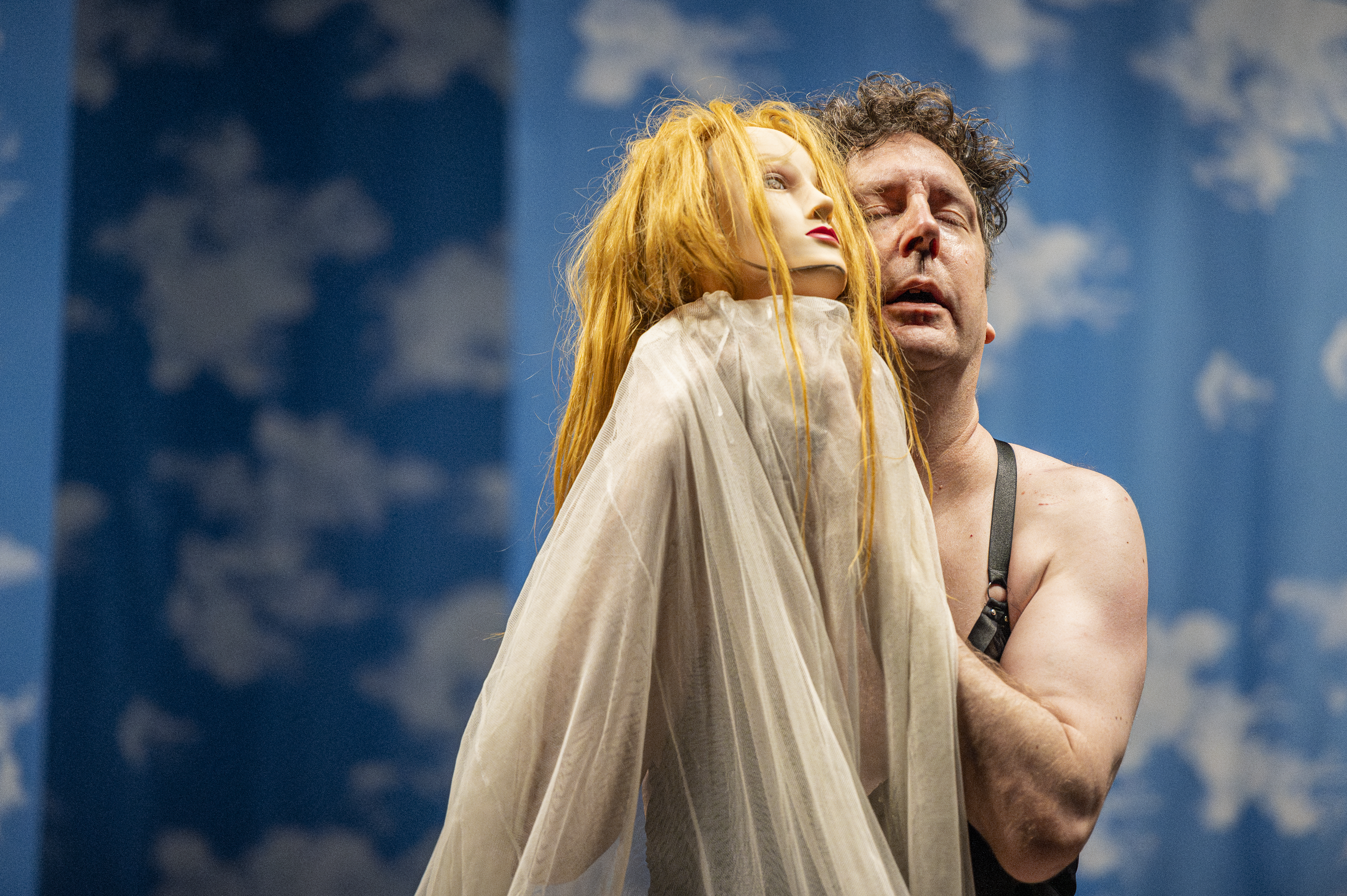
Jessica has a female face and a male body. Ville has a male face and a female body. Jessica’s face looks like a haircut training head. Ville’s face looks like juggler Ville Walo. All is perfect. Waves roll on the sand. Ville and Jessica have forgotten their past wounds. They love eachother. They are happy. Wind flutters their hair. Something bad must happen soon.
Themes
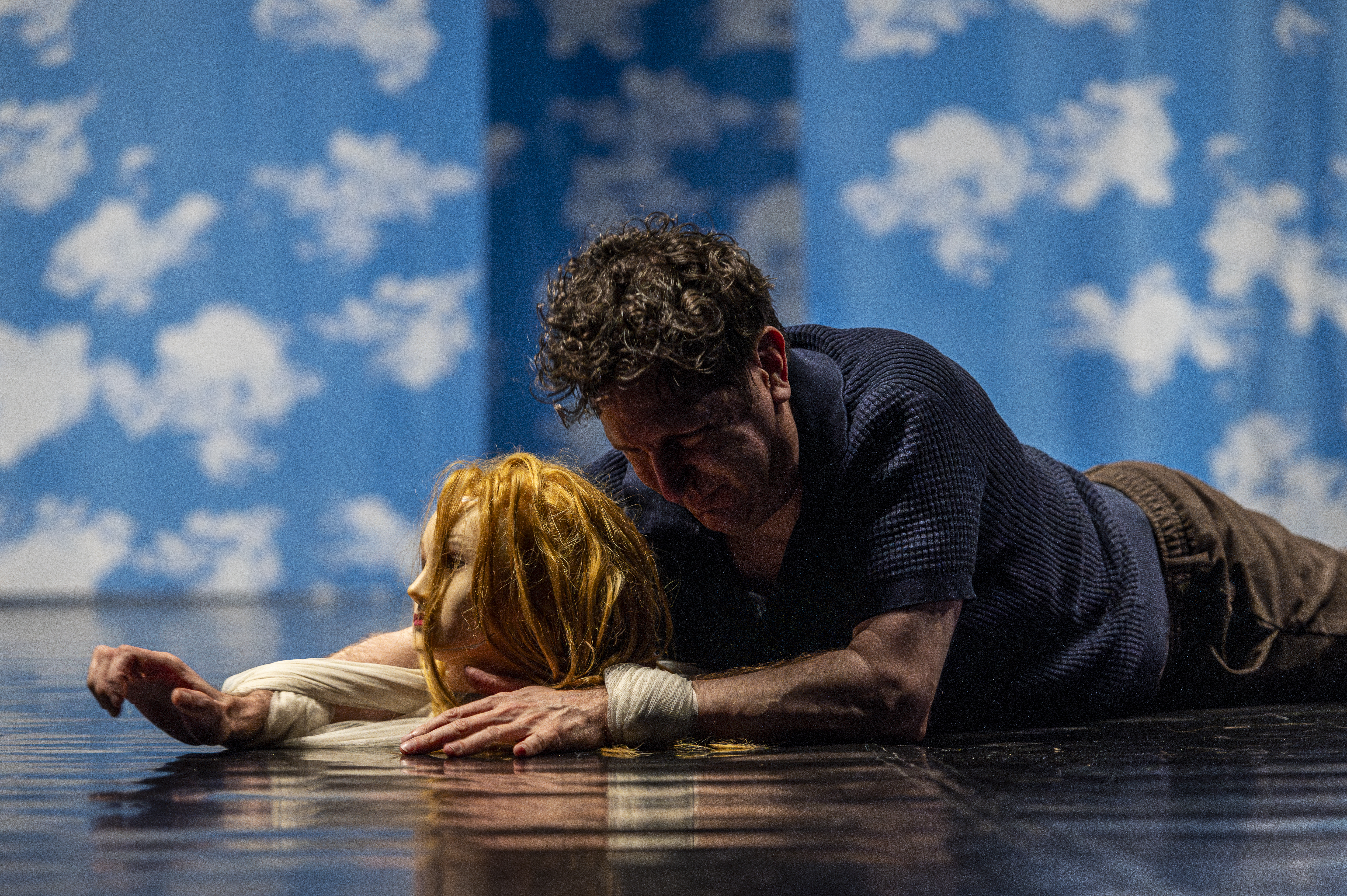
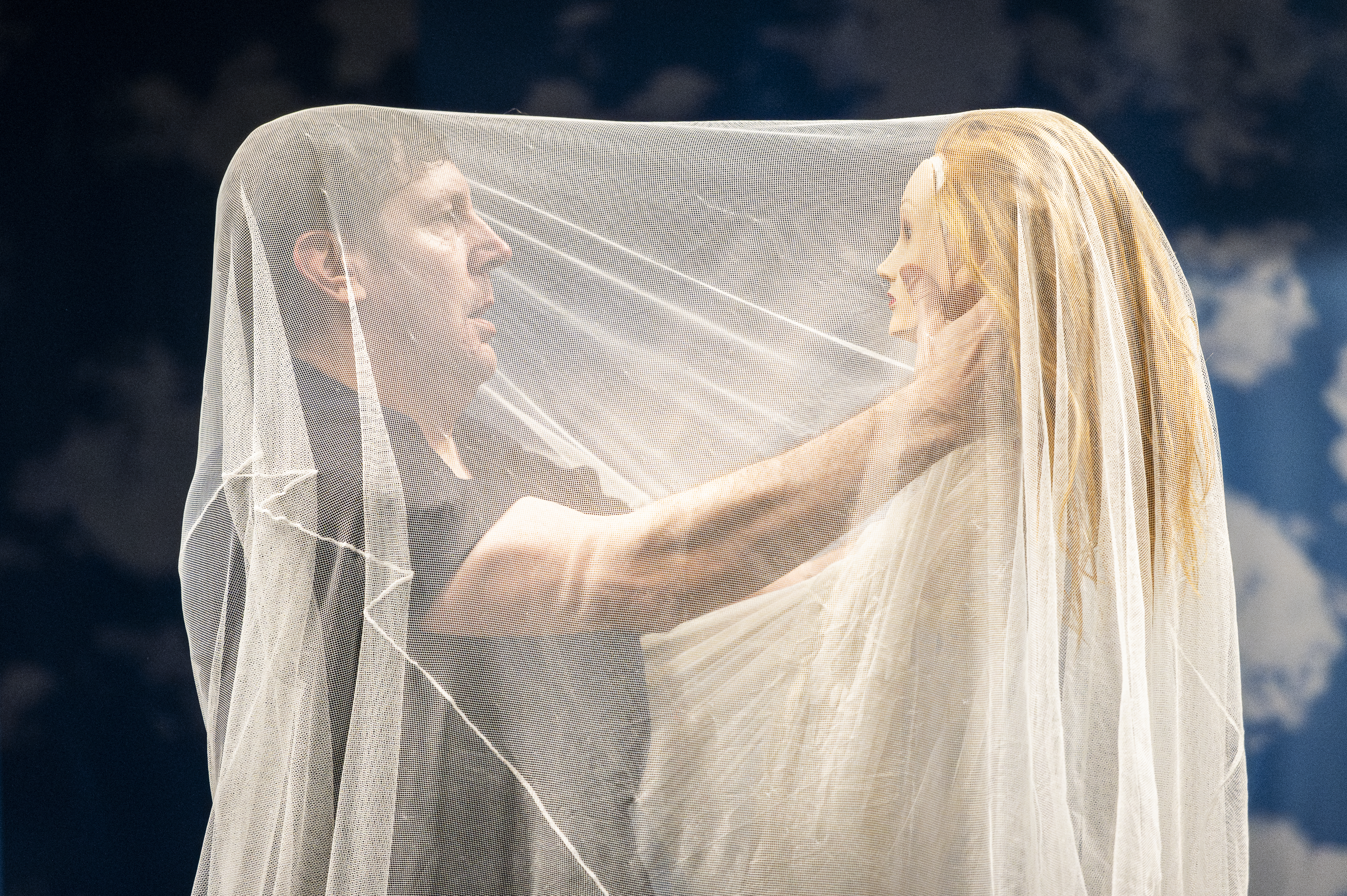
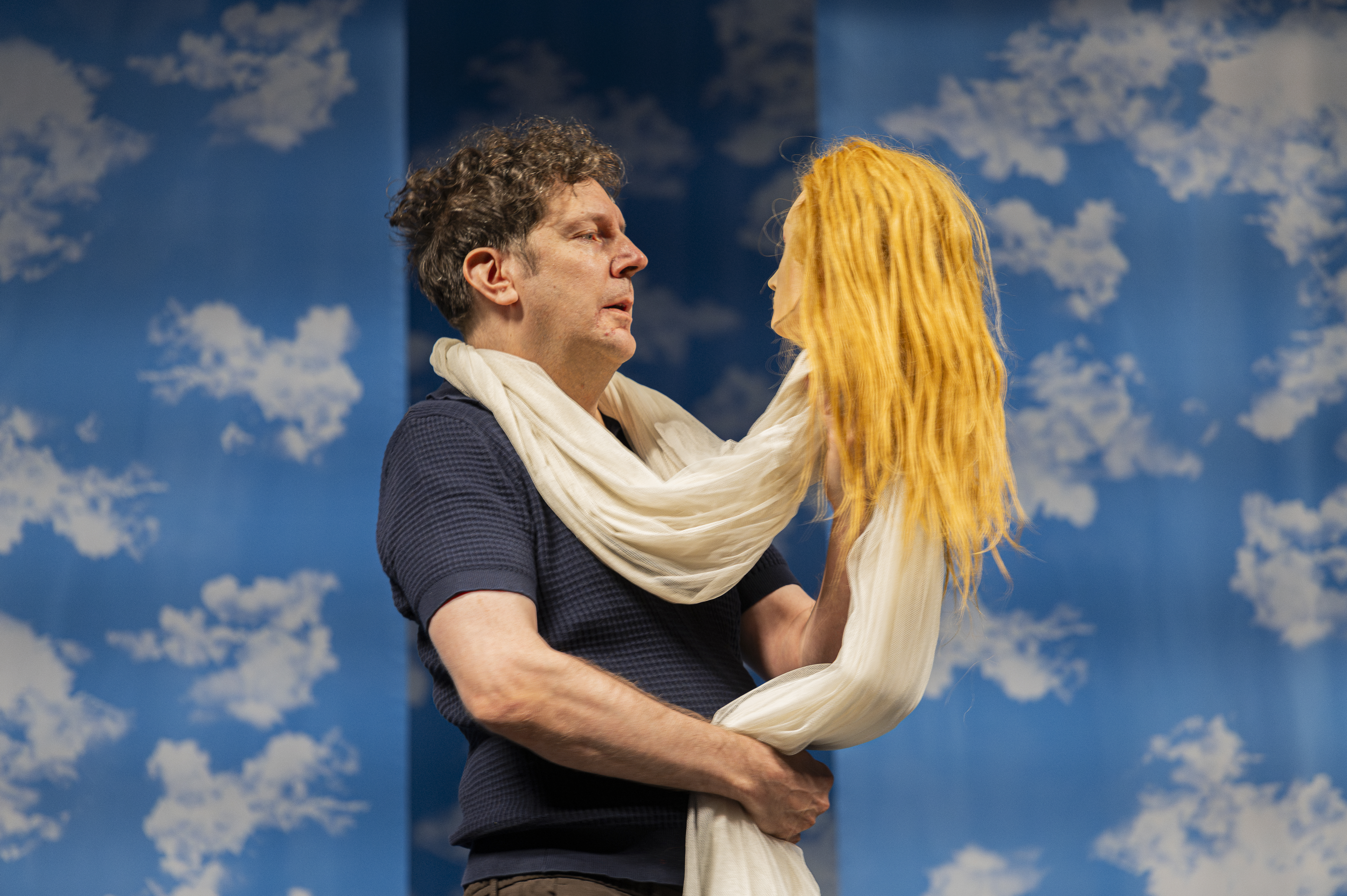
There’s no couple consisting of two persons on stage, and we don’t see a real life relationship. Manipulation, consent and identity take the stage. The performance grasps the current discussion about the hot topics of human relationships and self-definition. The boundary between self and other is tested by acts of tenderness and violence. Interaction is fictional and illusory in the solo performance.
When the performer handles a lifeless doll as his partner, we see how the boundary between two individuals is drawn, crossed and dissolves. Selfhood is defined in relation to the partner, who is left with the role of a beloved, fetishized or broken imaginary being. This virtuality is reflected also in how the images of the performance have been modified using artificial intelligence. There’s always something inhumane, wrong or excessive in them.
Gallery
For presenters & programmers
Festival & theatre pitch
Ceci n’est pas un couple is suitable for contemporary circus and dance festivals, performing arts seasons and curated programmes focusing on identity, gender and power dynamics. The performance combines contemporary circus, object manipulation and a precise visual world.
- Genre Contemporary circus / visual theatre solo with object
- Format Solo performance · approx. 50 minutes · no interval
- Language Minimal spoken text, accessible with English notes or surtitles
- Audience Recommended age 15+ · intimate to mid-scale venues
- Premiere WHS Teatteri Union, Helsinki, Finland, 11.09.2024
- Production Produced by WHS
- Context Artist talk or workshop on manipulation, object work and consent available on request
Technical rider — short version
- Stage / space Minimum playing area 6 m (width) × 6 m (depth), free height 4 m. Black dance floor, black masking where possible, full blackout capability.
- Sound Quality 5.1. PA with subwoofer; multi-channel playback from company laptop (6 outputs), mixing desk with min. 6 inputs.
- Light Warm and cold front light for full stage; 2–3 specials; cue-based light plan from venue desk.
- Set & props Doll and specific props travel with company.
- Power & control Standard 230 V outlets on stage and at FOH; light and sound control at FOH or back of auditorium.
- Personnel Local technician responsible for venue systems; 1 stagehand for load-in / load-out appreciated.
- Contact Detailed technical rider available on request: technic@w-h-s.fi
Credits
Performance & concept: Ville Walo
Set & costume design: Anne Jämsä
Produced by: WHS
Premiere: WHS Teatteri Union, Helsinki, Finland, 2024